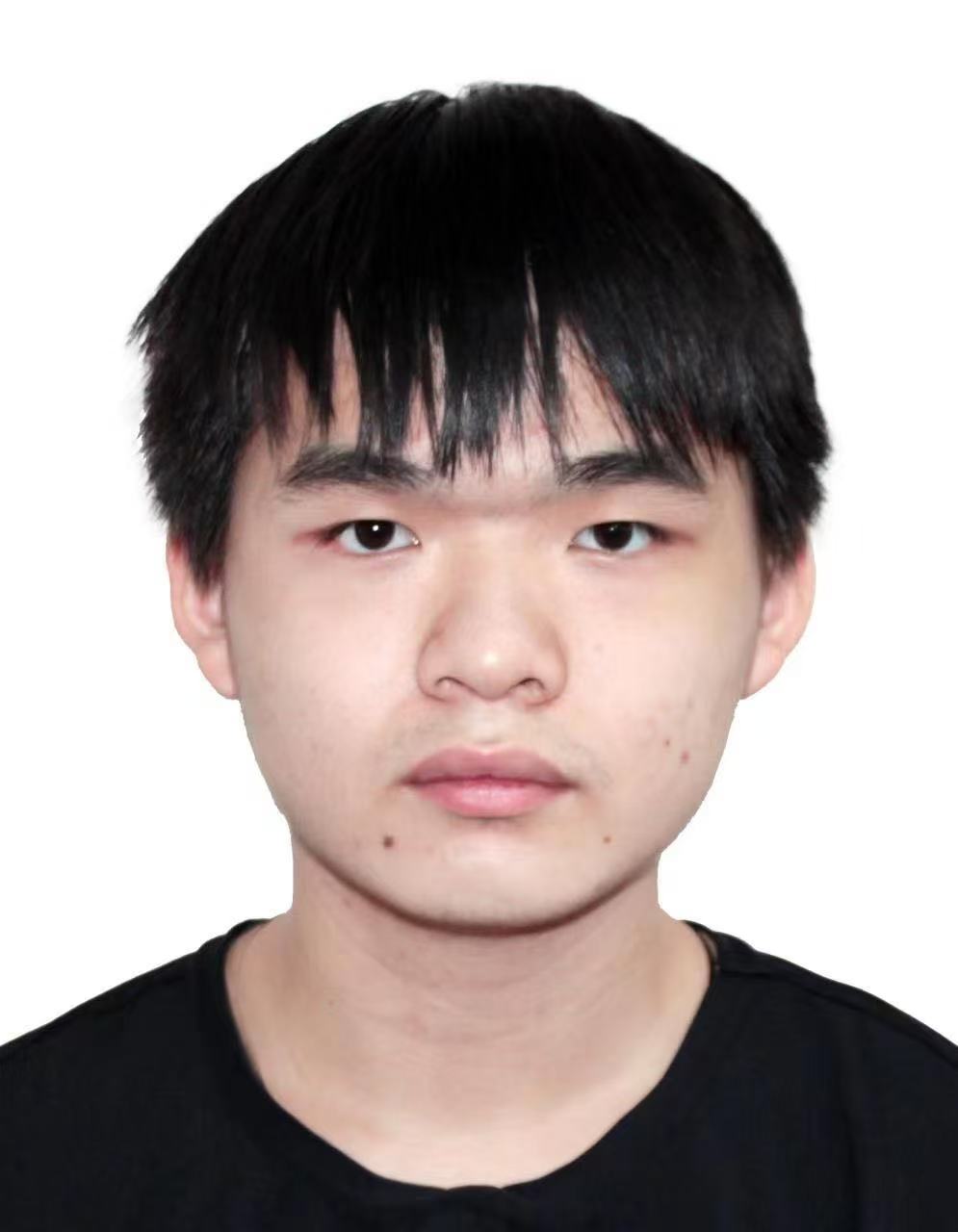
CV
- Email: qiantaowen2004@outlook.com
- Address: Heneng Fengdanlishe Residence, Baiye Road, Guitang Subdistrict, Yuhua District, Changsha City, Hunan Province, China
Education
- B.S. in Mathematics and Artificial Intelligence, University of Toronto
Professional Interests
- Computer Vision: Image processing, 3D reconstruction, generative models.
- Applied Mathematics: Algorithm design, optimization, mathematical modeling.
Research Experience
- Introduction to Computer Graphics Online Research Project (February 2025 – April 2025)
-
| USC Viterbi School of Engineering |
Advisor: Prof. Saty (DreamWorks Animation) |
- Mastered industry-standard tools including Blender, Maya, RenderMan, and THREE.js for 3D modeling, rendering, and animation, completing hands-on assignments to create and animate 3D assets.
- Explored the integration of modern AI-driven content creation techniques, including image, video, and audio, within the computer graphics pipeline.
- Wrote substantial sections of the final project report, detailing 3D modeling processes, rendering pipelines, and technical documentation.
- Led a team in the final project, from conception to delivery, culminating in a structured oral presentation and a comprehensive written report.
- Thesis topic: Towards Efficient LLMs: Analyzing Computational Bottlenecks and Optimization Strategies (accepted by the 2025 3rd International Conference on Artificial Intelligence, Database and Machine Learning, AIDML 2025).
Honors & Awards
- 2nd Place, Best Overall Game — Level Up Showcase 2026 (Presented by Zynga), for Salt, Grooves, and Garlic (Salty Studios, U of T & Centennial College)
- AMC12 Top 5% (2020)
- ARML National Bronze Medal (2019)
- Outstanding Student Leader Award, Yali High School (2021)
Academic Projects
- Salt, Grooves, and Garlic — Programmer, Salty Studios (U of T & Centennial College) (Sep 2025 – present)
- Project website
- Awarded 2nd place — Best Overall Game, Level Up Showcase 2026 (Presented by Zynga), recognizing mechanics, level design, interface, controls, user experience, and emotional impact.
- Collaborated in a 10+ person team to develop an action-rhythm game in Unity, where players combat monsters to the beat of music in procedurally generated dreamscapes.
- Programmed core gameplay mechanics, including the rhythm-based input system, boss attack patterns, and the dynamic “Groove Meter” health/performance system.
- Implemented and integrated 3D models, animations, and UI assets from the art team into Unity, ensuring a cohesive and functional gameplay experience.
- Participated in agile development cycles, including weekly stand-ups and playtesting sessions, to iterate on game design based on user feedback.
- CSC320: Introduction to Visual Computing (Fall 2024)
- Project 1: Homographies — Implemented a document scanner using homography transformations to unwarp images of planar surfaces; developed algorithms to compute homography matrices and backward mapping, achieving artifact-free results. Tools: Python, NumPy.
- Project 2: Beier-Neely Image Morphing — Built an image morphing tool using field warping and bilinear interpolation; optimized vectorized operations to improve performance by 75% compared to baseline. Tools: Python, OpenCV.
- Project 3: Exemplar-Based Image Inpainting — Implemented Criminisi’s algorithm to reconstruct missing regions in images using patch prioritization; analyzed edge cases (textured vs. uniform regions) and documented artifacts in a technical report.
- Project 4: PatchMatch Algorithm — Developed a randomized algorithm for efficient patch-based image editing (e.g., Adobe Content-Aware Fill); achieved near-real-time performance by minimizing explicit loops via NumPy vectorization.
- Vice President, Anime Club (2020 – 2021)
- Managed finances, negotiated sponsorships, and organized events (e.g., summer comic conventions).
- Volunteer, School Tech Support
- Assisted in maintaining IT infrastructure and troubleshooting hardware/software issues.
Internship Experience
- Intern, CNPower (June 2025 – August 2025)
- Deployed and maintained a NAS (Network-Attached Storage) system on company VMs for centralized data storage, configured user permissions, and implemented short-term backup/snapshot solutions to ensure data integrity.
- Optimized supply-demand logistics by leveraging AI-driven tools, reducing operational costs in transportation and labor through dynamic resource allocation.
- Developed a QQ chatbot integrated with the GPT API, enhancing functionality with contextual memory and multimedia support (e.g., stickers), improving user engagement.
- Explored Unity for prototyping small-scale games, gaining hands-on experience in C# scripting and 3D environment design.
Technical Skills
- Programming: Python (NumPy, OpenCV), MATLAB, SQL, C# (Unity)
- Mathematics: Linear Algebra, Calculus, Probability, Mathematical Modeling
- Tools: LaTeX, Git, Conda, Jupyter Notebooks, Blender, Maya, RenderMan, THREE.js, Unity
- Languages: English (Fluent), Mandarin (Native)
Publications
-
Qian, T. (2025). "Towards Efficient LLMs: Analyzing Computational Bottlenecks and Optimization Strategies." 2025 3rd International Conference on Artificial Intelligence, Database and Machine Learning (AIDML 2025).
Selected Coursework
Courses are grouped by subject branch; the semester in parentheses indicates when each course was taken (Winter 2026 courses are currently in progress).
- Artificial Intelligence & Machine Learning
- CSC384H1 – Introduction to Artificial Intelligence (Summer 2024): Classical AI topics including search, constraint satisfaction, game playing, knowledge representation, and planning.
- CSC311H1 – Introduction to Machine Learning (Fall 2024): Supervised and unsupervised learning including linear models, neural networks, decision trees, kernels, and probabilistic methods.
- CSC412H1 – Probabilistic Learning and Reasoning (Winter 2025): Probabilistic graphical models, Bayesian inference, variational methods, and Monte Carlo sampling.
- CSC413H1 – Neural Networks and Deep Learning (Winter 2026): Modern deep learning methods including convolutional networks, recurrent networks, transformers, and generative models.
- Computer Graphics & Game Development
- CSC320H1 – Introduction to Visual Computing (Fall 2024): Fundamentals of image processing, computational photography, and computer graphics, with emphasis on practical Python implementations.
- CSC404H1 – Introduction to Video Game Design (Fall 2025): Team-based development of a complete video game, covering design, programming, art pipelines, and project management.
- Computer Science Foundations & Systems
- CSC108H1 – Introduction to Computer Programming (Fall 2022): Fundamentals of programming in Python, including control flow, functions, lists, strings, and basic algorithm design.
- CSC148H1 – Introduction to Computer Science (Winter 2023): Object-oriented design, recursion, abstract data types (stacks, queues, trees, linked lists), and algorithm analysis.
- CSC165H1 – Mathematical Expression and Reasoning for Computer Science (Winter 2023): Formal logic, proof techniques, sets, functions, and an introduction to asymptotic analysis of algorithms.
- CSC207H1 – Software Design (Fall 2023): Industrial-strength programming in Java, covering design patterns, testing, version control, and software engineering practices.
- CSC209H1 – Software Tools and Systems Programming (Winter 2024): Systems programming in C and the Unix shell, covering processes, pipes, signals, and socket-based networking.
- CSC236H1 – Introduction to the Theory of Computation (Fall 2023): Mathematical induction, program correctness, regular languages, finite automata, and computability.
- CSC258H1 – Computer Organization (Winter 2024): Digital logic design, assembly-language programming, and the internal organization of a modern processor.
- CSC263H1 – Data Structures and Analysis (Winter 2024): Advanced data structures (heaps, balanced trees, hash tables, graphs) together with amortized and worst-case analysis.
- Pure Mathematics
- MAT137Y1 – Calculus with Proofs (Fall 2022 – Winter 2023): A rigorous single-variable calculus sequence emphasizing proof-based treatment of limits, continuity, differentiation, and integration.
- MAT223H1 – Linear Algebra I (Fall 2022): Vectors, matrices, linear systems, vector spaces, linear transformations, determinants, eigenvalues, and eigenvectors.
- MAT224H1 – Linear Algebra II (Winter 2023): Abstract vector spaces, inner product spaces, diagonalization, the spectral theorem, and Jordan canonical form.
- MAT235Y1 – Multivariable Calculus (Fall 2023 – Winter 2024): Partial derivatives, multiple integrals, vector calculus, line and surface integrals, and the theorems of Green, Stokes, and Gauss.
- MAT301H1 – Groups and Symmetries (Fall 2024): Introductory group theory: subgroups, homomorphisms, quotient groups, group actions, and applications to symmetry.
- MAT334H1 – Complex Variables (Winter 2025): Analytic functions, Cauchy’s theorem, residues, conformal mappings, and applications of complex analysis.
- MAT344H1 – Introduction to Combinatorics (Fall 2024): Enumeration, generating functions, recurrences, graph theory, and design theory.
- MAT315H1 – Introduction to Number Theory (Winter 2026): Divisibility, congruences, primes, quadratic residues, and elementary topics in analytic and algebraic number theory.
- Applied Mathematics, Statistics & Optimization
- MAT244H1 – Ordinary Differential Equations (Summer 2024): First- and higher-order ODEs, systems of linear ODEs, stability analysis, and qualitative methods.
- STA237H1 – Probability, Statistics and Data Analysis I (Fall 2023): Foundations of probability, random variables, common distributions, expectation, and the central limit theorem.
- APM236H1 – Applications of Linear Programming (Fall 2025): Linear programming theory, the simplex method, duality, sensitivity analysis, and optimization applications.
- APM462H1 – Nonlinear Optimization (Winter 2026): Theory and algorithms for unconstrained and constrained nonlinear optimization, including KKT conditions and convex analysis.
- Logic & Philosophy
- PHL245H1 – Modern Symbolic Logic (Fall 2025): Propositional and first-order logic with an emphasis on formal deduction and semantics.
- Electives (Social Sciences & Humanities)
- ESS205H1 – Confronting Global Change (Fall 2022): Earth-system approach to climate change, covering carbon cycles, glaciation, sea-level change, and human impacts on the environment.
- ECO105Y1 – Principles of Economics (Fall 2024 – Winter 2025): A broad introduction to microeconomic and macroeconomic reasoning aimed at non-specialists.
- FOR201H1 – Conservation of Tropical and Subtropical Forests (Winter 2025): Ecology, biodiversity, and management strategies for tropical and subtropical forest ecosystems.
- RLG319H1 – Death, Dying, and the Afterlife (Winter 2026): Comparative religious and philosophical perspectives on mortality, rituals of death, and conceptions of the afterlife.